Soberanes Fire: Week Five

August 19, 2016

Important caveats: Please note that the squares on the heat detection maps represent the expected margin of error, not the size of the area burned. In other words, the detection could have come from anywhere within the square. Also be aware that false detections do sometimes occur. An outlying or “over the line” heat detection is not, by itself, a confirmation that there is fire in the area indicated. In addition, the satellites do not detect heat everywhere that fire exists. Creeping, backing or smoldering fire is often not detected. Finally, the detections are only snapshots of moments in time. Flare ups that occur before or after a satellite pass may be entirely missed.

Also be aware that yellow squares disappear from the map after 6 days. These are not maps of the area burned since the fire began, just maps of where heat has been detected during the past week. Read the rest of this entry »


Soberanes Fire: Week Four

August 12, 2016

Important caveats: Please note that the squares on the heat detection maps represent the expected margin of error, not the size of the area burned. In other words, the detection could have come from anywhere within the square. Also be aware that false detections do sometimes occur. An outlying or “over the line” heat detection is not, by itself, a confirmation that there is fire in the area indicated. In addition, the satellites do not detect heat everywhere that fire exists. Creeping, backing or smoldering fire is often not detected. Finally, the detections are only snapshots of moments in time. Flare ups that occur before or after a satellite pass may be entirely missed.

Also be aware that yellow squares disappear from the map after 6 days. These are not maps of the area burned since the fire began, just maps of where heat has been detected during the past week. Read the rest of this entry »


Soberanes Fire: Week Three

August 5, 2016

For more recent updates, please see Soberanes Fire: Week Four

Important caveats: Please note that the squares on the heat detection maps represent the expected margin of error, not the size of the area burned. In other words, the detection could have come from anywhere within the square. Also be aware that false detections do sometimes occur. An outlying or “over the line” heat detection is not, by itself, a confirmation that there is fire in the area indicated. In addition, the satellites do not detect heat everywhere that fire exists. Creeping, backing or smoldering fire is often not detected. Finally, the detections are only snapshots of moments in time. Flare ups that occur before or after a satellite pass may be entirely missed.

Also be aware that yellow squares disappear from the map after 6 days. These are not maps of the area burned since the fire began, just maps of where heat has been detected during the past week. Read the rest of this entry »


Soberanes Fire: Week Two

July 29, 2016

For more recent updates, see Soberanes Fire: Week Three and Soberanes Fire: Week Four

IMG_2676

For earlier maps and notes see Soberanes Fire: Week One

Important caveats: Please note that the squares on the heat detection maps represent the expected margin of error, not the size of the area burned. In other words, the detection could have come from anywhere within the square. Also be aware that false detections do sometimes occur. An outlying or “over the line” heat detection is not, by itself, a confirmation that there is fire in the area indicated. In addition, the satellites do not detect heat everywhere that fire exists. Creeping, backing or smoldering fire is often not detected. Finally, the detections are only snapshots of moments in time. Flare ups that occur before or after a satellite pass may be entirely missed.

Also be aware that yellow squares disappear from the map after 6 days. These are not maps of the area burned since the fire began, just maps of where heat has been detected during the past week. Read the rest of this entry »


Soberanes Fire: Week One

July 22, 2016

For more recent updates, please see Soberanes Fire: Week Two,  Soberanes Fire: Week Three and Soberanes Fire: Week Four

Thursday 7-28-16 8:00 pm Update:

7-28pm

Lots of smoke coming from the fire today and there’s no doubt about where most of it was coming from… Read the rest of this entry »


Flashback! Julia Pfeiffer Burns in the 1960s

July 19, 2016

Just a few shots from the days before traffic jams and crowds…

Scan

At the Waterfall House with my mother and sister in 1966. Notice how the waterfall drops directly into the ocean. The beach formed after a 1983 landslide put a huge amount of material into the ocean just to the north.

JG 1

Mom and Sis on the terrace.

Brown House

Leading Mom around the house (I think this photo is from 1963). To get there, we rode down from the Highway on the funicular car.


Salmon Creek: The Good, The Bad, and The Ugly

July 7, 2016

IMG_2489

Salmon Creek Falls

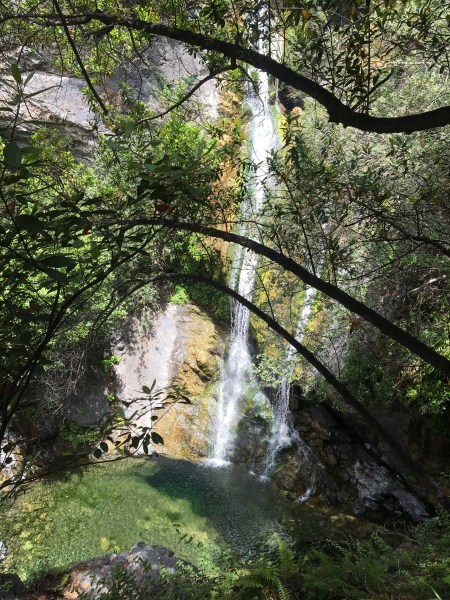
A massive surge in the number of visitors to Monterey County in general and Big Sur in particular has led to a large increase in the number of people camping along, and near, Highway One and other roads. While many of these people are, no doubt, careful to leave no trace of their visit, others light illegal campfires and leave their garbage strewn across the landscape. Read the rest of this entry »


The Campfire Conundrum

June 30, 2016

DSC09939

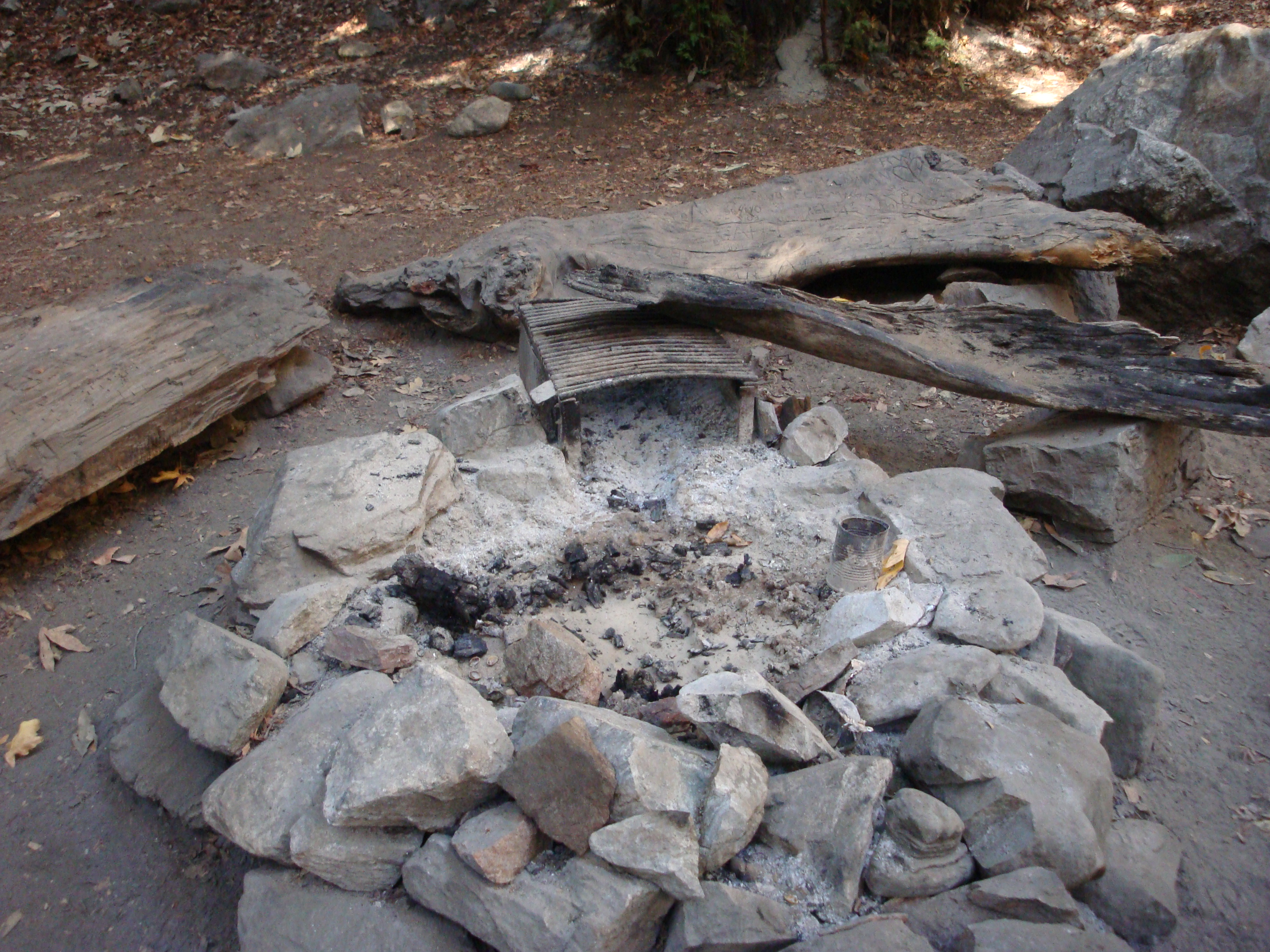
On a Sunday walk along the Pine Ridge Trail during Level IV fire restrictions in 2013, we looked at dozens of fire rings and couldn’t find a single one that hadn’t been used the night before. Read the rest of this entry »


Fire Season

May 28, 2016

pico-flames

Pico Blanco crowned with fire. (Lloyd Jones photo)

The grass on the hills is turning brown, seasonal streams are disappearing, and swarms of face flies have emerged to launch their annual shock and awe campaign against backcountry travelers.

This can only mean fire season is upon us. As is traditional at the start of fire season, the media has begun warning that this fire season is expected to be especially bad – maybe the worst ever. In wet years, this prediction is based on the grass being high. In dry years, on the simple fact that things are dry.

In reality, no one really knows what kind of fire season we’ll have. This is because the amount of rain we do or don’t receive in the preceding rainy season is less important than the kind of weather we get in the summer. In years when there are a lot of warm, windy days with low humidity (which is another way of saying days when offshore flow pushes the marine layer out to sea), there are likely to be more, and worse, fires. Fires simply ignite more easily in these conditions and, once they ignite, spread much more quickly.

It’s also worth remembering that the three largest fires to burn in Monterey County over the past 50 years (Marble Cone, Kirk Complex and Basin Complex) were started by dry lightning. Dry lightning storms are relatively rare in our area, but when they do occur they can overwhelm firefighting resources by starting hundreds of fires at once. Obviously, there is no way to predict whether such an event will happen in any given year.

As vividly demonstrated by the December 2013, Pfeiffer Ridge Fire, fire danger isn’t even limited to fire season. Given the right conditions, serious fires can occur at any time of year.

So how about this year and every year we all just make damn sure we don’t let our catalytic converters, tow chains, weed whackers, wood stoves, electrical wiring, guns, etc. start any fires and, meanwhile, make our homes as fire resistant and defensible as reasonably possible?


Dogs Banned from Carmel Beach

April 1, 2016

Wet Stick

The end of an era

The City of Carmel announced today that dogs have been banned from the Carmel Beach effective immediately. The ban is the result of a determination that the sound of barking constitutes a public health emergency. While monitoring of decibel levels near the beach has failed to find any instances of barking that exceeds government noise standards, the City believes those standards aren’t strict enough and that Scenic Road residents, in spite of having bought property next to a public beach, simply can’t be expected to put up with the sound of dogs frolicking in the surf and chasing each other in circles on the sand.

“Even extremely low levels of noise can be detrimental to physical and emotional health,” says a City spokesman, “and people living in multi-million dollar homes seem to be particularly vulnerable. Now that we’ve learned about the impacts of noise, we can’t pretend we don’t know how harmful it is. ”

Dogs are banned from most beaches in California and this has led to a gradual increase in the number of dogs visiting the Carmel Beach. While noise has only recently emerged as an issue, many Carmel residents have been complaining for years about an increase in visits by mangy mutts from outside the City of Carmel.

“I know it’s not politically correct to say this,” warns a member of the City Council, “but 70% of the dogs on the beach these days are not purebreds from the City of Carmel. These outside dogs just don’t have enough respect for the sensitive feelings of our residents. They just aren’t our kind of dogs.”

“Just to be clear, though,” interjects another member of the Council, “that has nothing to do with the decision to impose a ban. The ban is only because of the extreme public health emergency being created by barking.”

IMG_1871

A Carmel dog drowns his sorrow over the closing of the beach